Making A Dollar And A Difference
What does it mean to be a social entrepreneur? Marrying business with social responsibility has never sounded better, but what does it really mean. Today's guest is Tony Loyd, a leadership development expert who helps people who are frozen and frustrated in their careers to become purpose-driven business leaders. In this episode, we define social entrepreneurs and learn how we can become one so we can live a life of purpose and meaning.
[youtube=://www.youtube.com/watch?v=bJzJUCMWqkk&w=854&h=480]
CMC - #Tony Loyd
Thu, 1/28 9:42AM • 45:23
SUMMARY KEYWORDS
people, companies, business, called, shareholders, book, self assessment, question, sell, corporations, impact, kinds, podcast, social entrepreneurship, read, grilled cheese sandwich, wrote, social entrepreneurs, matchmaker, kerosene
SPEAKERS
Erin, Tony, Michael Benatar
Erin 00:08
Hey everyone, welcome to call me crazy. Today we have Antone loi, he is a coach for entrepreneurs and he helps people find their purpose in life. If you feel like you're struggling and you you work every day, but you want to find a social or purpose driven mission, that's what Tony kind of helps people do. And we're really excited to hear from you how you got started and how you help entrepreneurs like like us.
Tony 00:34
Thanks it's really great to be here. I did not know you guys until I found you. I think on matchmaker dot Yeah. Yeah, it's not the matchmaker
00:47
dating website.
00:48
Now when I when I first signed up for it, I went to my wife, I said, Okay, now if you look at my browsing history, you're gonna see that I'm on this site called matchmaker. Let me show you what that is.
Michael Benatar 00:57
It's been great. I really like it because it's easier to find people that are interested in coming on podcast. Yeah, it's always hard because sometimes people like, want to come on or they don't. And then people hear on Matchmaker, they want to come on, they want to talk and a
01:11
lot of them also have podcasts. So it's a great way to share, you know, people that love podcasts can hear the other person's as well.
01:17
Yeah, absolutely. So I'm, I'm a new fan.
01:21
All right. Well, welcome to our family. Family background, Tony, how did you what do you do? And how do you transition into this awesome coaching?
01:32
Yeah. So I have a fortune 500 career, I did, you know, technical consulting about 150 years ago, you know, when we're still writing dinosaurs and stuff, but then I went into fortune 500 executive position, and I worked with some of the biggest brands on Earth. But at some point, you know, you kind of see how the sausage is made. And, and, you know, I had a lot of conflict around the fact that we were giving first priority to shareholders, which meant when it came to choices and trade offs, everybody else lost, right? So the earth loses, the customers lose, everybody loses, if they come into conflict with the shareholders, the people who own the stock in the company. So I started thinking about, there's got to be a better way. And I started looking for people who were doing better. And I started to find people who were making $1, and a difference. They were making money, but the money was in service to a mission. And those people are called social entrepreneurs. So I've never heard of social entrepreneurship. I didn't know anything about it. But I left my corporate job, I started pursuing this idea. I I'm now I teach at the University of Minnesota and their grand challenge curriculum. I wrote a book about it. I have a podcast about social entrepreneurship. And, you know, so that's, that's kind of how I got into all this. So I'll just pause there let you jump in with any question. Yeah,
03:04
I had a question. So with say, you know, the fortune 500 companies, I you know, here on the bio, we wrote that, you know, Buffalo Wild Wings, he big companies? Yeah. How What do you see that they could do in the future? That could be a little bit more, you know, social, like a social entrepreneur, because I think
03:22
it didn't start as social but they want to be
03:24
Yeah, I think there's such different beasts to that. It's, you know, when you're smaller, I feel like you do have a lot more flexibility than when you are that big. Yeah, it's hard to kind of move the boat in that direction sometimes. But I'm just curious, you know, what your thoughts are from being inside what they do?
03:39
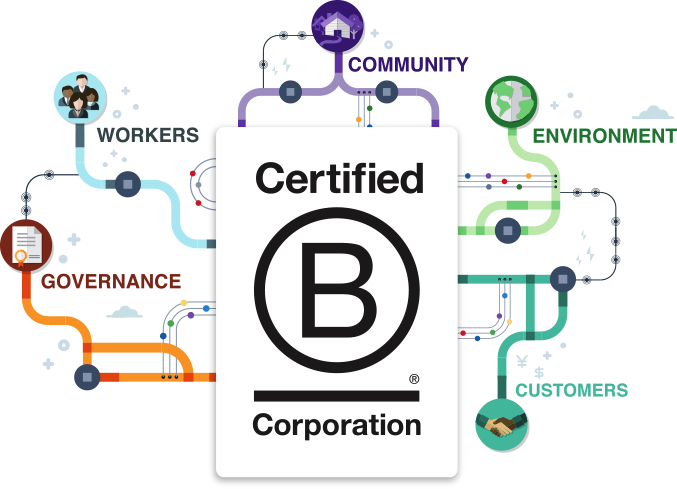
Yeah, well, there are, you know, not all corporations are evil. So there's that, you know, that kind of stereotype, we got the big evil corporation, right. So. But, you know, most companies have a corporate social responsibility program, where they try to use their philanthropic dollars, they volunteer, they have employees volunteer for different things, they partner with nonprofits. There's a group called the Social Venture Partners where people can do skills, volunteering, so not just go down and fill up bags at a soup kitchen or something, I don't know. But you can actually if you're great at marketing, well, there are nonprofits or startups who are social enterprises who need that kind of skill set. If you're great at finance, will they need that kind of skill set? So So there are a lot of ways that people can get involved from their social from their corporate job and corporations can involve more people. Here. Here's the challenge, though. Most large corporations are our C corporations, which mean that the shareholders are the ones who really own the company. And so whatever the shareholders say, that's really what happens and that You know, if you own stock in a company, you'll get a card in the mail every now and again said, you know, we're going to have a vote and do you want to give somebody your proxy in order to, you know, and stuff like that we don't pay that much attention to it. Or we may be we own stock and an index fund that owns lots and lots and lots of companies inside that index fund. And so the way that these things get implemented sometimes is what what will happen is sometimes there's an activist shareholder, and that x activist shareholder will come in, and they'll say, You're not maximizing profit enough, and then they will sue the company, or they'll force the way under the board, or something like that. And so, you know, being in the executive suite, and I've been in the executive suite, it is an impossible task, to say we have to give short shrift to our shareholders. Right. So that is, that's a challenge. And you do have a legal fiduciary responsibility so that that's a challenge. But there are companies who have chosen to either start or to become what's called a B Corp, a benefit corporation. And so there is this other kind of construct. So there's c corpse, and s, corpse, and LLCs, and all these different kinds of ways. But there is one that is a fairly new way, which is called a be corporate benefit corporation, and you write into your charter, to say, look, shareholders, we are going to take care of the planet, our employees, the communities in which we serve, because we think that creates values and customer loyalty, etc. And so if you're investing in us, you have to know that upfront. So there are companies that go that way, or, you know, private companies don't have this shareholder value, kind of pressure, or small startups don't have that or etc, etc. But, you know, there are ways to do this in a way that you protect yourself as a company, while at the same time you're able to do the kinds of mission driven work that you want or need to do.
07:07
And from your path from fortune 500, Executive to this coaching, where where did you kind of fall in or read or what what were your passions that kind of drive you that way? Because, you know, when you get into something, I feel like a lot of times you just jump right in? Yeah. Did you start, you know, interviewing a lot of people inside be corpse, or did you start, you know, investing in companies? How would that approach?
07:30
Yeah, that's a great question, Michael. So where I first thought about or heard about social entrepreneurs was, it was Christmas. And I think this was 2010. And I was in Chicago with my wife, we were at a nice hotel, I think it was a Talbot hotel, very nice hotel. And one of my favorite things to do is to read a newspaper like like, you know, a tactile kind of take a piece of paper and put it in your hand and read it. And so it was around Christmas morning in 2010. And I was reading the New York Times because I'm in this hotel, and they have all kinds of newspapers. And in the times there was this article, and it was about this woman who lived in rural Kenya, who, who owned a cell phone. And and there were no there was no electricity in her village. And so she used to get on the back of a motorcycle taxi, and she would go half a day to a city, she would leave her cell phone with someone to charge it, she would get back on the motorcycle taxi, come back home. And then the next day, she'd repeat this and go back and pick up her cell phone and bring it home. And now she'd be really careful about you know, charging the phone, make sure that it was still charged her turn it off and all that. And what she was doing was she was checking the prices of chickens in nearby villages, because that way she could sell her poetry at maximum price and she could go around. Well, one day, a guy from a company called barefoot power came into town. And they sold these small little solar panels. And so she could put the put up this solar panel on her house. And it's a small little thing. And it could run a light at night or it could charge her cell phone or she could even charge her neighbors to charge their cell phones. And what had happened was prior to that time, she'd been buying kerosene to burn it night. So kerosene is a dirty fuel. It has indoor pollution. Lots of people die young from lung cancer or other impacts from kerosene. Plus, her kids couldn't study well by so by getting this solar panel first in three months price of kerosene. She had paid for the solar panel. And then her kids school Grades started going up because it could read later into the night, she started making money from this because her neighbors would come over and she charged him a few shillings to plug in their phone and, and to charge their phone. And so it was like this win win win win win business model. And it just like, it just blew my mind. It was like, wait a minute, this is a real thing. And so that was the article that I read that started me down this path of trying to figure out what is this thing? Yeah. And then in March of 2015, I went to a class at University of Minnesota, it was like a public offering class. And, and they talked about two things. They talked about human centric design. And they talked about social entrepreneurship. And so that was where I first met social entrepreneurs. And, and because of my business skills, I started mentoring them. And so that's how I kind of got on the inside track. And I started meeting all these social entrepreneurs, they were telling me their stories. And one day I went, this would make a great podcast. So I started recording these stories. We're now on about Episode 300 of my podcast, social entrepreneur. Plus, I took some of those stories, the first 150. And I put them into a book and the book became a best seller. So it's been this sort of mind blowing kind of journey for me.
11:23
Is that the book really good advice?
11:24
Crazy, good advice. Yeah,
11:27
I love this story. And I wonder like, you know, probably now social entrepreneurship is defined like you got a course on it. But back, you know, even before 2010 your story in Kenya, like, I bet there were entrepreneurs out there trying to do this, but it didn't even have a name. And who knows, you know, now it's becoming, you know, it's taken seriously now. Yeah, I think it's been happening for like, decades and decades. Yeah. Have you
11:50
defined it? Right, right? Well, you know, there's the, I think the if you go all the way back to the original business model, right. So somebody in a village grows vegetables, and their neighbors can't grow enough vegetables, or their garden failed. And so they go to a marketplace, and they sell these vegetables, and the and the neighbors buy them. And there's a benefit, right, and there's this sort of holistic, natural trade system that's happening. But what happened is, over a period of time, we started building these businesses where we extract value from a community and we take it somewhere else. And that is kind of an unnatural business model. So what we're really doing with social entrepreneurship, is we're returning to the root of what it is to be a good business person.
12:41
Did you have a question?
12:42
Is there are there a couple pillars or elements that a social business should keep it in their in the front of mind as they're either building their company, or as they're making decisions? Like, does it have to be hyperlocal? to give back to the community? Does it have to be a certain type of product? Are there any like guidelines? I mean, obviously, it could be done in so many ways. But yeah,
13:04
yeah, I would say. So every business that you start, you're going to ask yourself a series of fundamental questions. So number one, who do we serve? Number two? What's their problem? Number three, how do we solve that problem? Number four, how do we make money from that so that we sustain and grow our company? If you were starting a hotdog stand, or you were starting a major corporation? Those are the four first four questions you have to ask, Who do we serve? What's your problem? How do we solve a problem? How do we make money from that? The thing that and you you already know, because he's, you know, your business owner. So you know how hard that is to to just get that right to get launched and to start growing your business. Now, imagine if, while you were doing that you were trying to solve homelessness, or while you're doing that you are trying to solve hunger or clean water or health or education or something else on top of that. So the you know, I would say, you know, it's kind of like the Hippocratic Oath first do no evil. Right. So if, you know, we all know the story of TOMS Shoes, right. And how do you know the story of TOMS shoes? I met you? Yeah.
14:22
You can tell though, in case somebody doesn't know that. Yeah.
14:24
Yeah. So so you know, Blake, bless his heart. You know, he has been like the poster boy for things not to do. And so, you know, he's a great guy, his hearts in the right place. But he went off to Africa, and he started, you know, this business where he was, you know, if you buy a pair of TOMS Shoes, we're going to give away shoes to kids in Africa. Well, that's great, except because he didn't do enough homework. He didn't know that by doing that. He was crippling the shoe industry in Africa. Like the local shoe makers. Were going dude was the depot. I'm making my living doing this and you you're coming in here with free shoes. So, you know, Blake had eventually changed his business model today does free Fairtrade coffee, etc, etc. But I'd say, you know, Principle number one is first do no harm. Principle number two element I didn't
15:16
know that element of the story at all.
15:19
Yeah, which is a cool thing. Right? Yeah. You know, when they first started, they just, you know, I mean, look, we've all made mistakes as entrepreneurs, we have all stepped in it. And so, you know, that was that was what he did. I'm going to tell you in a second, like four different ways that you can use a business model to do social good, but let me let me just finish answering your question here. So first, you'll first do no harm. And the second of all, if you're going to take on a social problem, it's important to understand why that problem has persisted for such a long period of time, right? So if you want to solve youth homelessness, that's fantastic. Knock yourself out. But it's a really complex issue. And there are so many factors, and every person becomes homeless from their own path. And so you really have to do that kind of systems thinking, the complex problem analysis where you really understand from multiple angles, what's going on. So, you know, it has all the elements of a startup. And yet, it has two more layers of deep complexity over and above a regular startup.
16:38
And do I mean, just from the sounds of it, you know, just getting a startup going? or small business? It's already hard. How many What do a lot of these fail? Because it's so complex to continue going? Because you're trying to do more than what's normal at the beginning? Sometimes, right? Yeah, trying to do this giveaway that do that.
16:58
Yeah, harder. Yeah, it is harder, you know, it is harder, let's just face it. Let's not, you know, it is harder, because you're trying to do two things at once. And at some point, you're going to come to this conflict, where you say, are we impact first? Where are we money first? Because if we don't make money, we can't sustain our impact. And if we don't make an impact, what's the point of making money? So you have to you have to make hard choices and trade offs in order to do this,
17:28
and have what would have some scenarios been that you've seen that are really hard, where a business has to decide, you know, we have to go make money now, because we're not going to be able to support just the business itself?
17:39
Yeah. Well, you know, I think one of the one of the places where people get in trouble is when their impact is a second thought. It's the thing that they're trying to layer on top of something else. And if you can bake the social impact into the business, if this if this impact doesn't happen, the business doesn't happen, right? If you can bake it in, then you're going to survive no matter what. So you know, there are some companies that make an impact by what they sell. And I'll give you an example of that. There's a guy out of Argentina, he he's now in, in the LA area, but he his name is Sebastian sahzu. And he, he was concerned about recyclable plastic. And, and what happens is when you get a bag of chips, it's the bag is made from laminate plastic, which means they take multiple kinds of plastic, and they layer them together so that you can't separate them. And because it's mixed waste, you can't recycle it. And so toffee wrappers, all kinds of things are made from this laminate plastic. So his big concern was what are we going to do with all this because all this plastic is going into the environment. Well, he he talked to a lot of people he went to Europe he looked at a bunch of different business models, he you know, did a lot of research. And then he came up with this idea to grind up that plastic and to make what he calls smart gravel and smart gravel is just it's this, this gravel made from recycled plastic. And and so it is highly sought after by the construction industry because it is like 10 times better at thermal insulation. It is lighter so they can save cost and shipping. It is better sound insulation. And if you build something using this smart gravel, you get LEED certification for your for your building, because you are or LEED certification points because you're Using a recycled material, so now he takes this plastic out of the environment, he makes this smart gravel, he sells it by the truckload. He's not making a tiny impact, he's selling it by the truckload, to these construction companies. And by doing that he's making a difference by what he sells. And so the more of it he sells, than the bigger the impact now, if, if push comes to shove, you cannot take the social impact out of that business. The social impact is that Yeah, right. So the more you can bake it into your core, then the bigger the impact you can have in the end, the less you're going to be tempted with those choices and trade offs. Yeah, that's
20:45
a great example. Yeah, thanks.
20:48
That's a real lemonade out of lemons.
20:52
I know it was it, is it like, it's almost like that at the parks. Right? When you like, step on the little gravel, it's kind of bouncy, you know, stuff like that. Yeah, that's great. I mean, that. And a lot of people are doing that to where they're kind of taking these materials that no one wants and turning them into something people want. And that's a great business model, too, because like, we're just gonna go to the trash anyways.
21:12
Yeah, yeah, there's a there's a woman named Susan nowait. Oh, gosh, I'm gonna call the wrong name if I try it. So, but she has a company called evernew. eV are and you and I'll think of her name here in a minute, Stacy something. Anyway, she, she was a buyer for some major clothing companies. And she went to China to the factory to just talk about, you know, the next season and the new colors, and what kind of material they needed, etc. And when she got there, it was like, they were dumping the effluent out into the river. And there was this haze of toxins so thick, that when she was sitting in the conference room, inside the factory, that there was like, a haze hanging in the room of toxic gases. And so she's like, what business am I? What am I doing, you know, so, so she went home, and she worked with a chemist and they came up with this process to take cotton material, cotton fibers from discarded clothing, and to break it down into its components and reconstruct it into a material that can be you know, you can weave it, you can sew it, you can cut it, you can dye it is just like a cut material. And so she she's got a prototype with Levi's, for a pair of jeans, she's got a prototype with I'm trying to think of who it is sporting goods, clothing manufacturer. So, you know, every year this is, you know, the dirty secret of the apparel industry, is let's say that you have your fast fashion and you wear it out or it gets wet hole or whatever. And or, you know, the colors fading. You take it to Goodwill Salvation Army, and you go here and you go, oh, some other kid is going to wear that. No, that's not what happens. Most of the clothing that goes to those places either end up going to someplace to be sold as bulk material, and then that gets used in kind of, you know, industrial things. But the vast majority goes to the landfill. I did not know that. Yeah, I didn't know that either. So So she's solving this by the more that she can take out of the waste stream, then the more good she's going to do. So again. You know, it's it's what she sells, right?
23:42
Yeah. And I will, let's, let's take dope dog, for example, because maybe you can help us do it even more. We sell CBD dog treats. And our mission is to make dogs happier, we donate a percentage of sales every month. And then we also donate to a lot of rescues do a lot of partnership with rescues. But I guess, you know, thinking about it and talking to you, oh, could we make forum full? Because right now does almost seem like it's just there, in a way even though we really do like that was one of our things we really wanted to do. And we you know, we partnered with tons and tons of rescues that how do you make it more and
24:22
more than just money? donate it? Yeah, that's what I was. You know, 1% back. And that's like, at minimum, like, how can you make that more impact? I
24:31
guess? Yeah, that's Yeah,
24:32
that's Yeah. Well, first of all, let me just applaud you for asking the question, right? Because you're kind of putting yourself in a tough place to ask a question. So So, you know, I've mentioned what you sell. That's one way that you can make an impact the other three ways that you can make an impact. And you mentioned one of them is what you share, right? So I can give you some other examples of companies that are sharing which is important, but then how you staff and how you think source. So, so first of all, you know where you're getting your raw material. Is there. Is there a fair trade kind of chain going back? Are you you know, what about regenerative farming that's being used farther back in your value chain. So as you think about how you source where your where your supplies come from, and looking back across that chain, are your suppliers paying a living wage? Right? You know, so there are all these things that you could look at through your supply chain through sourcing, Fairtrade, natural organic, regenerative agriculture, etc. Then the other thing is how you staff right so as you make staffing decisions, who are you hiring, who you giving opportunities to are there people who normally don't get an opportunity for a job? I'll tell you a great story on this. So in I'm in the Minneapolis St. Paul area, and in Minneapolis, there's a grilled cheese sandwich restaurant. Now, first of all, yeah, you've got my attention. Is sandwiches, right, man? Yeah. So Emily Turner is the one who started that. And she used to be a an attorney with like HUD with Housing and Urban Development, right. And so she was an attorney. And she dealt with a lot of housing issues. And she was there firsthand seeing people like get kicked out of low income housing and pushed to the street and all kinds of terrible things happening. But one of the primary things that was happening is, somebody gets arrested for whatever reason, often drug charges, they go to prison, they come back, now they won, they have to find housing right away to they have to find employment right away. And a lot of people they get out early, if they don't find housing and employment right away, they go right back into prison. Because that is the rule you get out under the condition you find a place to live and you get a job. Well, so this really bothered her. So what she did was she started this grilled cheese sandwich restaurant, because she's like, What skills do I have? What's the one thing I can do? What do people brag on me about? Well, I make a good grilled cheese sandwich. So she started this grilled cheese sandwich restaurant, and she hires people who are coming out of the, you know, the justice system. She trains them with a culinary school. And now those people are blowing her business up, because they'll get into the kitchen and go, you know, what, what if we put some jerk chicken on this, what if we put some whatever else on it, you know, I have this Indian recipe I've been wanting to try and, and so this place is off the wall great food on the basic grilled cheese sandwich. So she makes a difference by how she staffs.
28:00
And it's tough to because I guess since we are so small still, like, basically day to day it's myself an errand running the company. And as we expand, that's definitely something to look at too. Because it it's hard sometimes to you know, think about it or move forward. And I, I was curious, because I think you know what we do? Maybe we could do more and think about that. Because, you know, I never thought about like, where it's coming from, you know, it said, you know, organic ingredients, human grade ingredients. And, you know, we think they're high quality. And then maybe we go that step further and be like, okay, where are they really coming from? Maybe it's john and whatever, his farm in Pennsylvania that we now use, and he had a bag and that's about I mean, that's it, but then I also there's like two parts of me. It's like, I really want to do that. And then I watched. Did you ever watch that one where he? The McDonald's one where he ate McDonald's for 30 days?
28:55
Oh, yeah.
28:57
So there was like supersize me three. And he started. He started the chicken thing. Yeah. Where he started a all organic pasture raised free range. And you know, they're all these weird words that he could use, because technically they were all true. Yeah. And a lot of it is marketing. So sometimes it's hard to differentiate the the marketing aspect of it, like, you know, all organic free range. It's like, oh, wow, this must be great chicken. And so then you think like, Okay, how do you really do that without seeming to marketing, but really having that meaning behind why you need
29:35
real social entrepreneurs coached by Tony. You're led by people with a conscience.
29:42
Yeah, you know, there is a, there's a B certification. And there is a I'll have to look up the site for it, but you can go online and take the free self assessment on B certification. It's like, I don't know, maybe 48 questions or something. And, and so they'll ask you about your employment practices, and they'll ask you about your supply chain. And they'll ask you about, you know, government regulations and how you go about meeting those or whatever, you know, so they have this, this, this self assessment that you can take, and then later, if you want to really go deep, then you can become a certified B Corp. And, and that is that you're going to subject yourself to some scrutiny to say, okay, we're gonna look all the way back through your supply chain, we're gonna look at, you know, all of your employment policies, how do you share the wealth within your organization? You know, you know, what's the ratio between the CEOs pay and the lowest employees pay? And so there is a free online assessment, just, you know, look up B certifications assessment, and, and you should be able to find it.
30:53
Cool. That sounds great. Yeah. I mean, it's, it's interesting, because I didn't even know there was a B Corp. So or, and that's something that, you know, there's a lot of nonprofits and everything like that. And I think this is an interesting view. And is there any Do you know, off the top of your head, like the tax breakdown? Is it the same as an S corp or C Corp? Or do you get taxed differently? Because
31:12
now it's all the same? Oh, no, it's so I actually I have an escort myself. So and I have an escort because I wasn't planning on bringing on shareholders. And because I wasn't bringing on shareholders, I didn't need the B Corp. structure. So I'm, you know, I'm finding the company myself. So. But an S corp and a B Corp are very, very similar in tax structure.
31:38
Okay.
31:39
And we're an LLC, and, you know, we need to go to a C Corp, is it? Are you saying that a B Corp would be almost equivalent, or a counterpart to a C Corp?
31:48
It can be? Yeah, I mean, so there is a there is a Delaware B Corp, you know, lots of companies incorporate in Delaware. And because they have like, common structure around how do you treat corporations, and there is a Delaware B Corp, and you could take a quick look at that. Or I have some attorneys. Have you ever if you ever need an attorney, I have some people who are experts at this, I could refer you to
32:13
Yeah, no, that's we got to look into that. So before we wrap up, we want to hear your call me crazy story, Tony. So our podcasts, call me crazy. We all started a business. So is there anything you can share with us that maybe will give some inspiration to our listeners?
32:28
Well, I think so first of all, you know, I wrote this book called crazy good advice. And, and the story of how the name came about was I was interviewing a guy out of Seattle. And he runs an incubator, and the name of the incubator is fledge. And so this is a guy who is start started and sold six businesses. And now he runs this incubator that has hundreds of businesses that have come through, he's helped these companies to grow and scale and get investment and go on. And, and he said, Look, when you tell your family and your friends and your loved ones, that you're going to start a business and they tell you that you're crazy, they're right, let's just face it, you have to be crazy to do this kind of stuff. So in order to do something like this, you might as well make the biggest impact possible. So that that's where the story of crazy good advice comes from, or where the title came from. But like, in, in, in 2015, through 2018, I was I was working like a maniac. What I did was I had this really strong work ethic, and it's how I ended up, you know, vice president in large organizations, etc. And, and so I was, I was working like a maniac. And then when I left my corporate role, I brought that work ethic with me. And I just felt killed myself. You know, I was doing the, you know, roll out of bed at four o'clock in the morning and work and then, you know, finally my wife would come in and say, Look, I'm gonna eat dinner, do you want to come in and eat dinner or not, you know, because I was still working and, and I was podcasting three times a week and, and then you know, had a lot of different things going. So at the end of 2018, I had a breakfast with a friend of mine, Michael. And, and Michael's like, you know, he asked me the common question, right? How you doing? Yeah. And, and I said, you know, honest to God, I am depressed. And, and he was like, so what does that look like for you? What do you mean when you say you're depressed? And I said, I don't know if I want to be alive.
34:56
And with when those words came out of my mouth, first of all, the look on his face was like wine, right, you know, and then hearing the words come out of my own mouth and seeing the look on his face. It hit me really hard, what I just said. And so you know, right away, I just said, You know what, hey, listen, I'm not planning on harming myself, this isn't a self harm conversation. I just don't get the point. You know, I've been doing this kind of purpose driven work. And I've been doing it for so long. And I just kind of feel like I am at the end of myself. And so the primary mistake that I had made was, I believed that if you're trying to do something that has a big enough, why a big enough purpose, that self care wasn't that important, that that you would be uplifted, that that purpose would drive your passion, which would get you to do those crazy hours and do all the things required in order to run multiple businesses and add all that. And, and so I spent 2019, kind of going Ctrl, Alt Delete, right, I had to backup and I had to say, Why do you do what you do? And how are you doing it. And so I did a self assessment, I call thrive, connect, contribute. And so I assess myself in 10 areas, you know, everything from physical health, mental health, intellectual, spiritual, and then my relationships, right, so as a parent, as a husband, my relationship to my community, and then my contributions, so my financial contribution, my vocation, my avocation that included my causes, and, and places where I volunteered and all that. So I did this massive self assessment at the beginning of 2019. And then in 2019, which wasn't 2020, which was a crazy year. But in 2019, I did this thing called my year, my year of personal bests. And what I did was I just went back to the route and just said, If I were living on a scale of one to 10, if I were living my best life, and these 10 different areas, what would that look like? And so by doing that, I built up my internal fortification, so that when we went into 2020, and it was such a crazy year, I was solid, I was just, like, rooted down in who I am. And what I'm here for, and, and all that, you know, Stanislavski has these three Stanislavski was this great teaching coach? And he has he's, he has seven questions, but there, you could boil it down to these three. Who are you? Why are you here? What do you want? And honestly, if you can't answer those three questions, it's time to kind of back up and get inside and start doing that internal work. Because, look, Michael, and Aaron, you know, this 90% of success is internal work. You got to be solid in here, before everything else works out there. So, you know, who are you? What do you want? Why are you here? And, and so I that was my crazy story that I just I was so off the rail, I wasn't even sure I wanted to be alive. And I really had to back up and I had to answer those kinds of questions and do the self assessment and then figure out how on a scale of one to 10 I was gonna try to live my best life and I'll attend to those areas.
38:25
And what I mean just I that was that was deep. I mean, it really does mean a lot to because it is tough, it is mentally straining and tough to run your own business and you never know where you know what the break looks like. And I think it's a trouble sometimes like you're just foot on the gas and you're going you know, like when do I when do I take off for hip hop? Or when do I do this? Yeah. Any any recommendations on like books or what you did that? Really? I mean, you could also email us we can put in the description if you Yeah,
38:56
yeah, there's Yeah, there's a few there's a few so one that really helped me with my kind of like my mental health and and all that there's a book called Oh, give me a second is by Johann Hari. Jo h. n. Give me one second, I'll tell you the name of their doors.
39:18
I'm trying to see if I can look it up to
39:21
lost connections. That's it. Lost connections, Johann Hari lost connections, why you are depressed and how to find help. Hmm. So I love Love, love that book. Because he he talks about the fact that that what we do most of the time is kind of unnatural, right? So we isolate ourselves inside of these buildings so that the weather outside doesn't get to us. We live under unnatural light. We work in these not natural communities that are these, you know, corporations. So a lot of what we do, it's kind of like You know, we haven't really we're, we're eating fake food, it's like that, right? So our lives, sometimes we live these lives that are not connected well, so. So I mean, I grabbed one more thing before we came in here. And now I know why I brought it. So I wrote this thing recently about the seven elements of thriving. And, and so in order for us to thrive, right, we need love. And, and I use that word very liberally. Because it's, it's about meaningful connections and shared values, if we're going to thrive, we need to have a sense of feeling significance. So being a sense of being seen by others, we need a sense of security, right? in our, in our persons in ourselves, we need variety, we need a sense of contribution that we're giving back, that's we're making a difference, we're making an impact, we need a sense of agency, so that we feel like, you know, we have some choice in our situations. And then we need growth, that we're achieving mastery in something. And so I wrote this the other day, the seven elements of thriving and, and I started thinking about my corporate life, and how often those things were restricted. Right. So your growth opportunities, your, you know, your sense of agency, the the fact that you're making a contribution that matters, that you're seeing that you feel significant that you know that you there's a lot of variety in your work, and you feel secure in your work, or that love is in the workplace, you know. So as you're building companies, and as I'm building companies, I think about these seven elements, if I'm gonna grow a company that matters, I want this in my company, I want people to, to freely use the word love. Now I get that there are creepy things that people can do. Oh, I'm doing it out of love right now. So I know that. But I do think that if we're really rooted in, like shared values, if we're really rooted in all that, then then we can, you know, we can create environments, we can use entrepreneurship, and business growth, as a con as a context, that that can hold all kinds of things. So if we create those kinds of communities that thrive, then all kinds of amazing things can come out of it. So anyway, that's, that's a book that I would recommend. I mentioned, Johann Hari, his book. But then one more that I just started reading this last week, and I've read it four times now in the last week, and it's called turning pro,
42:45
turning pro. Okay.
42:46
And pressfield. So the war, the War of Art, he wrote the word of art. You know, you guys appreciate this. I feel like sometimes there are books that chase me around until I read them. You know, like, read me read me. Happy reading Really? Well, the War of Art was a book that has been chasing me around forever. I knew I needed to read it. And then recently, a friend of mine, sent me an email. And in the email, she said, I bought you this book is on Kindle. It's called turning pros by Steven pressfield. And, and by the way, here's a $25 amazon gift card. If you want it in audible or paperback or some other form, I think you need to be reading this book. And it was the middle section that has been extracted out of the War of Art. Like this thing has been chasing me around forever. And so I finally read it. And now I've read it like four or five times in the last week, and I'm obsessed with this book.
43:49
Oh, it's great to get
43:50
out and let us know the name of your podcast so everyone can follow you. And we'll also include that in the bottom because you're full of you're full of knowledge I love. I've been called full of things before, but it's never knowledge but
44:04
really great. Yeah, so social entrepreneur is the is the primary podcast. And then I have a second one called thrive, connect, contribute. So social entrepreneurs about how to use business to do good. We tell positive stories from underrepresented voices focused on solutions. And then thrive Connect contribute is about stories of resilience, right? So people who thrive in life, connect with others and contribute to the world in the face of adversity. So those are the bad guys.
44:34
Yeah, and I just listened to right before this. I was listening to the episode 306 the one with the the baby deaths With the cradle. Yeah, yeah, that was she really got into it. It was like really strong right at the beginning of the podcast.
44:48
Yeah, women die all over the world from childbirth. And that's unfair. Yeah. Hello to YouTube.
44:55
Tony, thank you so much for joining the podcast, Tony Lloyd calm and then we'll put everything In the description, links and everything, you can find it and I think on your website right now you can get the copyright free book as well, right? That's right. Cool.
45:07
All right. All right. Thanks, Michael. Take care.